


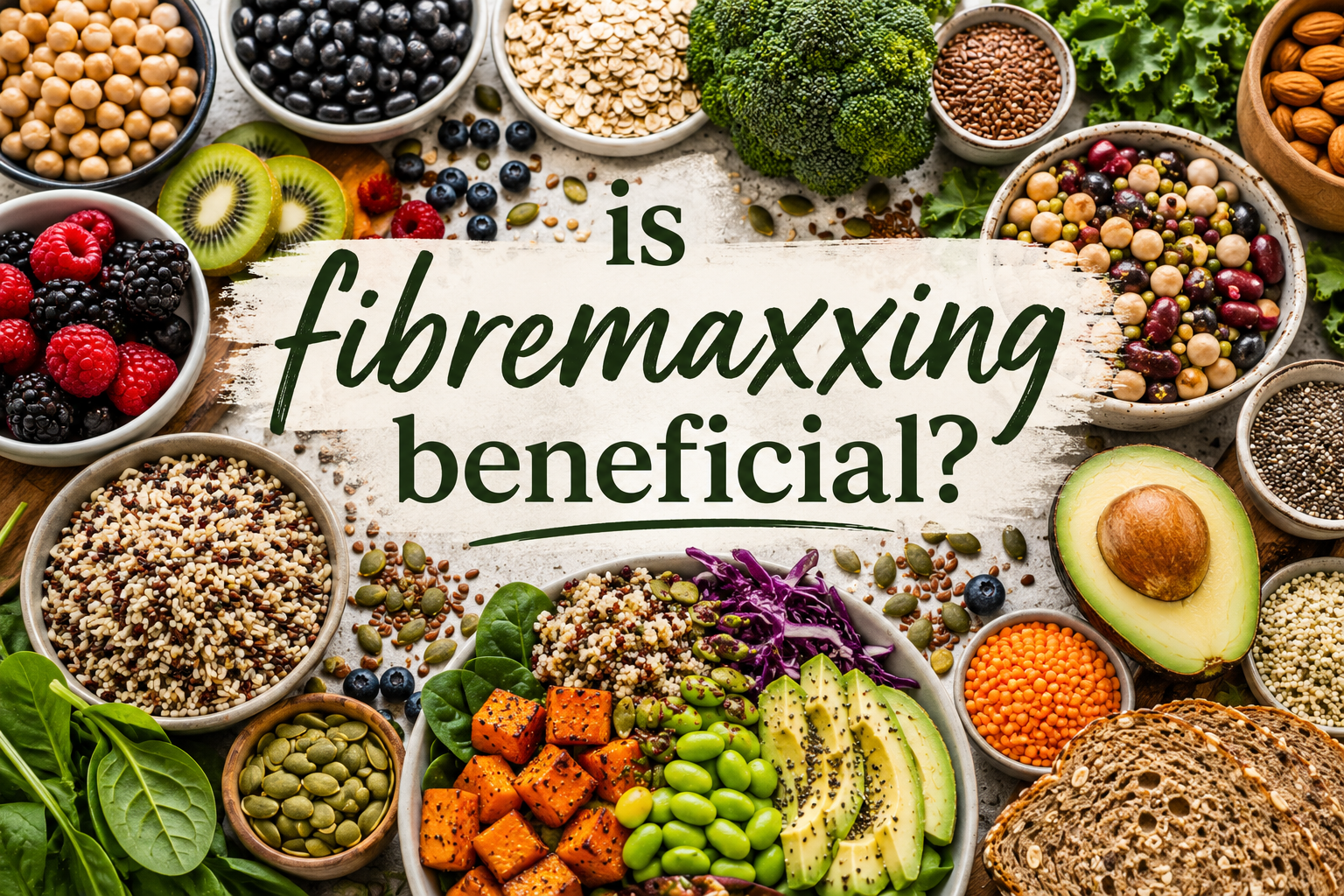
The fibre maxing trend is one of the few viral nutrition trends that’s actually grounded in science – but it’s getting a bit distorted on social media…
Let’s break it down.
First – what is “fibremaxxing” actually?
It’s exactly what it sounds like: trying to eat as much fibre as possible, often way more than you were before. Usually this looks like adding more fruits and vegetables, switching to whole grains, throwing beans and seeds into meals, and sometimes using fibre powders or “high fibre” products.
And here’s the thing – most people do need more fibre.
General recommendations sit around 25g per day for women and 38g per day for men, and most people aren’t even close to that. So yes, increasing fibre is a smart move.
But fibre isn’t just about digestion.
Getting enough can help you stay fuller (which is huge for fat loss), support gut health, improve cholesterol and blood sugar, and keep things moving regularly. Fibre largely comes from foods people should already be eating more of (namely, fruits, vegetables, whole grains, beans, legumes). So if this trend gets someone eating more of those foods, that’s a win.
Where people start running into problems is how they approach increasing fibre because of this trend.
Most go from barely eating fibre to suddenly trying to “max it out.” And your gut is not impressed.
Unsurprisingly, the result is usually bloating, gas, stomach discomfort, and sometimes even constipation. That happens because your body needs time to adapt.
Jumping straight into a high-fibre intake is like going from zero workouts to training twice a day – it’s not discipline, it’s poor planning.
Fibre needs to be increased gradually if you want your body to actually handle it well.
Another issue is that people start focusing so much on fibre that everything else falls apart.
Protein intake drops, calories become inconsistent, and meals turn into random combinations of “healthy” foods without structure. Then fat loss stalls, progress feels confusing, and frustration kicks in.
Fibre is important, but it’s not the only thing that matters. You still need enough protein, appropriate calorie intake, and balanced meals overall. We cannot stress this enough.
There’s also a big difference between getting fibre from whole foods versus trying to hack it with powders and processed “high fibre” snacks. Supplements can add fibre, but they don’t replace the benefits of real food.
Whole foods bring vitamins, minerals, volume, and actual satisfaction, which is what helps with consistency long term.
So what’s the smarter way to approach this?
- Start by increasing fibre slowly – add a little at a time over a few weeks instead of overhauling everything overnight.
- Build it into meals you’re already eating, like adding berries to breakfast, vegetables to lunch, or beans and whole grains to dinner. Keep it simple.
- Make sure you’re drinking enough water, because fibre without fluids will just make digestion worse.
- Don’t ignore protein – fibre helps with fullness, but protein is key for results. And most importantly…
- Aim for consistency instead of trying to max anything out. You don’t need the highest possible intake – you need enough, done consistently.
The bottom line is that fibre maxing itself isn’t the problem. The all-or-nothing mindset around it is.
Yes, you should eat more fibre.
No, you don’t need to completely overhaul your diet overnight.
And no, it won’t fix everything on its own.
In reality, the goal isn’t to max anything – it’s to build a way of eating that actually works and that you can stick to.
Want help with this? Our team of experts at MacroNutrition specializes in this approach – all recommendations we give are designed to fit your unique life.
Contact us today
Let’s see what we can do for you!