


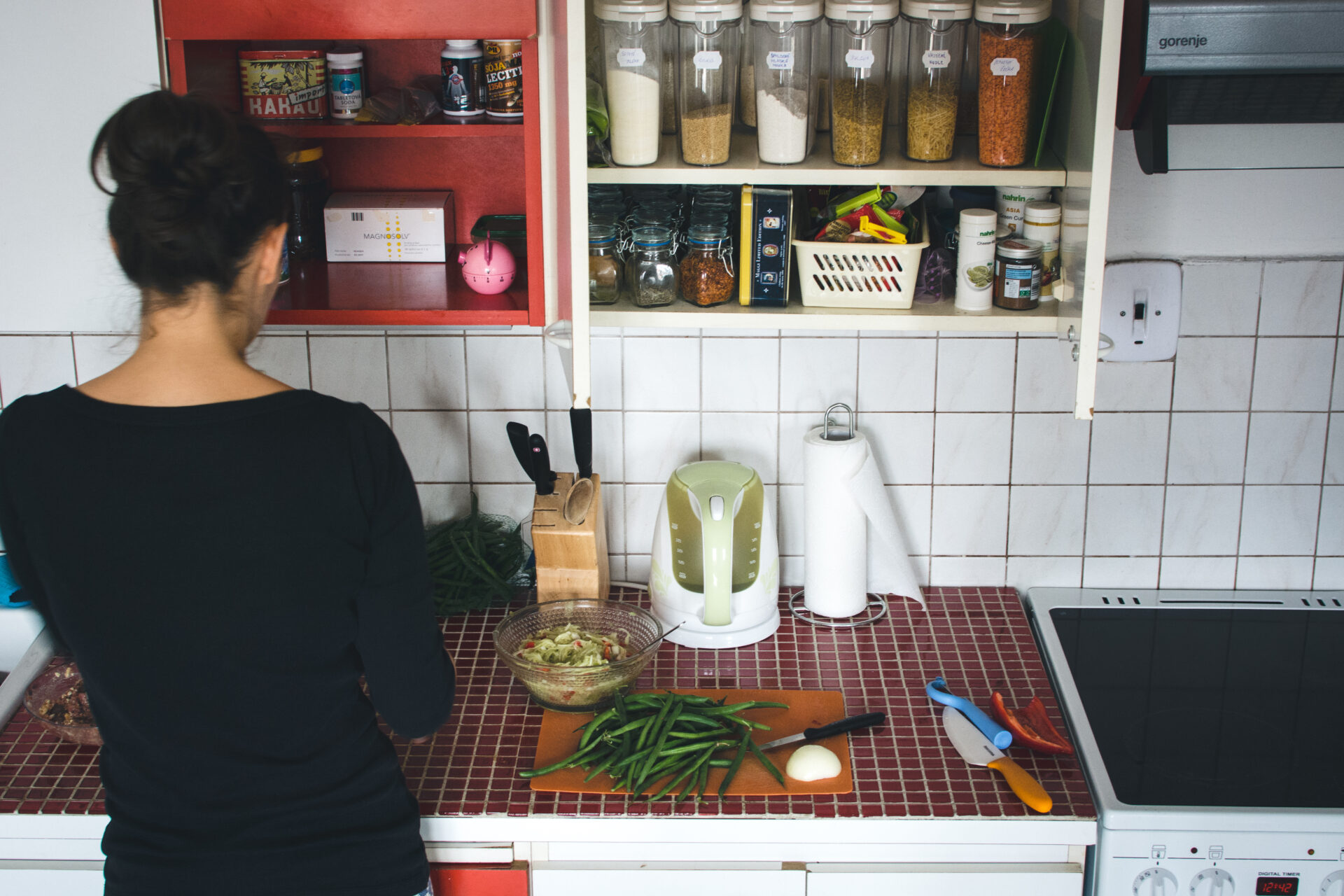
If improving your nutrition or building a healthier routine is a goal this year, don’t miss this blog.
You can’t always control meals eaten out, but you can control the environment where many daily choices happen: your kitchen.
And the way your home food space is organized (and what tools you have) plays a powerful role in shaping daily food decisions, often influencing what you and your family reach for – without anyone even realizing it.
To create a kitchen that supports balanced, nourishing choices, try these six simple hacks:
1. Tuck away those snack foods
If salty or sugary snacks live on your kitchen counter, move them to a less visible spot in the pantry. When foods aren’t constantly in your line of sight, you’re naturally less likely to reach for them out of habit.
Research from Cornell University found that people who kept items like candy, cereal, and soda on their counters weighed significantly more (20+ lbs more!) than those who stored them out of sight. On the flip side, keeping a bowl of fruit on the counter was associated with a lower body weight (by nearly 15 lbs).
2. Revamp your refrigerator
Place the foods you want to eat more often – such as fruits, vegetables, lean proteins, eggs, hummus, yogurt, cottage cheese, and milk – at eye level. When hunger strikes, you’re more likely to grab what you see first.
3. Make your freezer friendlier
Your freezer can be a major asset for quick, nutritious meals. Frozen produce is flash-frozen shortly after harvest, often preserving nutrients better than fresh produce that sits on shelves for days.
Stock up on frozen vegetables like broccoli, peas, spinach, carrots, and edamame for easy sides – you can even find interesting vegetable mixes, including some stir-fry blends!
4. Upgrade your pantry
Take time to clean out and restock your pantry with staples that make balanced meals easier:
- Whole grains like quinoa, brown rice, and couscous for sustained energy
- Canned beans and lentils for quick protein and fibre
- Rolled oats and whole-grain cereals for fast breakfasts
- Air-popped popcorn for a satisfying, crunchy snack
- Canned tuna or salmon for simple protein additions
5. Use smaller dishes
Dish size matters more than most people realize. Larger plates and bowls often lead to larger portions without increased satisfaction.
Try swapping 12-inch plates for 10-inch ones and using smaller bowls for snacks, cereal, and soups. The same goes for glasses – keep large glasses for water up front and smaller ones for higher-calorie beverages.
6. Get the right gear
You don’t need fancy appliances to eat well, but a few basic tools can help with consistency:
- A kitchen scale for learning portion sizes Nutrition labels on many foods, such as dry pasta or cereal, list serving sizes in ounces, making them tricky to estimate. Weighing your portions can give you a good feeling for what a proper serving looks like.
- Measuring spoons and cups for calorie-dense ingredients PRO TIP: Try these instead of ladles or serving spoons for correctly sized portions every time.
- Muffin tins for perfectly portioned meals Think meatloaf or quiches.
- A spiralizer and/ or peeler To improve veggie-based meals.
- A zester to add flavor without extra calories Zesters are also ideal for shredding cheese finely, so you’ll use less of it.
Creating a kitchen that supports your goals makes healthy choices feel easier and more automatic. If you’d like guidance on building sustainable nutrition habits that fit your lifestyle, we’re here to help.