


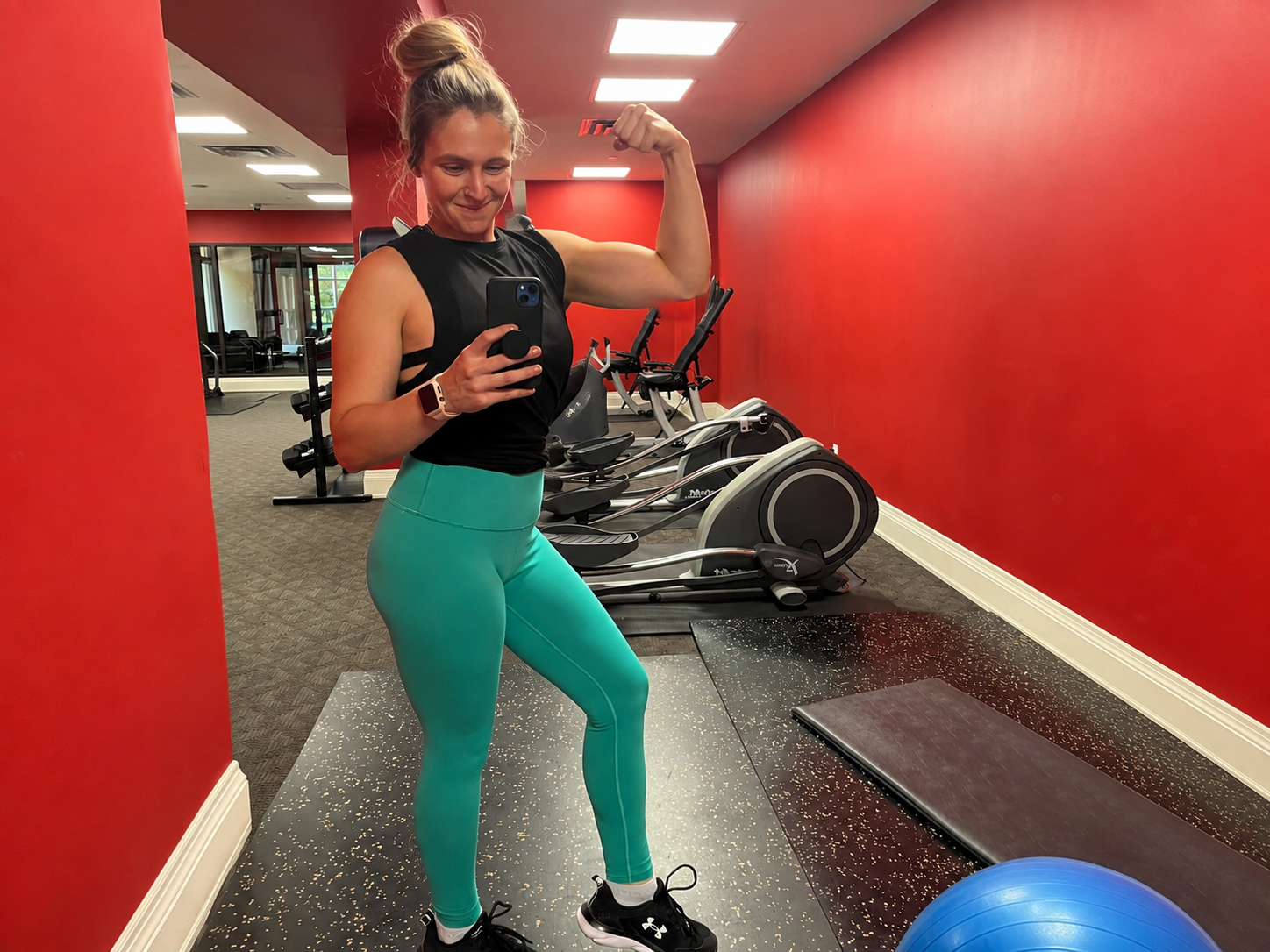
By MacroNutrition’s Head Coach, Jenn Commisso
Fitness culture can make exercise feel like a full-time commitment.
Five or six days in the gym. Hour-long workouts. 10+ exercises per session. Cardio on top of strength training. And if you aren’t drenched in sweat or sore the next morning, did the workout even count?
And I get it… for someone with a career, family or demanding schedule, it’s easy to think: “If I can’t do all of that, what’s the point?”
But I promise you that when it comes to exercise, more does not automatically mean better.
The goal is to find the amount of training you can consistently perform, recover from and progress with over time.
This is often referred to as your minimum effective dose. And it doesn’t mean doing the bare minimum. It means making the work you do perform count.
You can accomplish a lot with just two or three well designed strength-training sessions per week.
Rather than measuring a workout by how long you spent in the gym, how much you sweated or how sore you are the next day, focus on four things:
1). Training volume: You needenough challenging work to stimulate the muscles you’re training.
2). Effort: Your working sets should actually feel challenging.
3). Exercise selection: Prioritize movements that effectively train your major muscle groups.
4). Progression: Gradually improve by adding weight, reps or improving your execution.
From there, you need the main element that drives it all home – consistency!
A two-day program you can consistently follow for months, outperforms a five-day program you can only follow for three weeks.
READ THAT AGAIN.
Here’s are the steps to help you structure your minimum effective dose training program:
1. Start with what you can realistically commit to. If you can only commit to training 2 days a week, start there! Full-body workouts are a great option when time is limited.
2. Prioritize the big movements. Build your workouts around the major muscle groups such as squats, lunges, hip hinges, presses and rows. If you have extra time, add accessory work for areas like your shoulders, glutes, arms or core.
3. Make your sets count. If you finish 10 reps knowing you could easily perform another eight, the set probably wasn’t challenging enough. Aim to finish most working sets feeling like you could perform roughly another 1-3 good-quality reps while maintaining proper technique.
4. Progress over time. Don’t change your entire workout every week. Work on gradually adding reps, weight or improving your execution.